


What is the principle of the air brake?
The air brake system operates via an engine-driven air pump that compresses air into high-pressure storage tanks. These tanks connect to a brake master cylinder with upper/lower air chambers for rear/front wheel braking. When the brake pedal is pressed, the upper chamber releases air to the relay valve, which pushes high-pressure air from another tank to the front brake cylinder via a push rod.
Braking occurs as the rear handle cam rotates to expand brake shoes against the drum, generating friction.
Key components include storage tanks, master cylinder, front quick release valves, rear relay valves, brake cylinders, four adjusting backrests, four cams, and eight brake shoes.
Brake cylinders are critical, receiving pressured brake oil from the master cylinder to ensure effective braking.


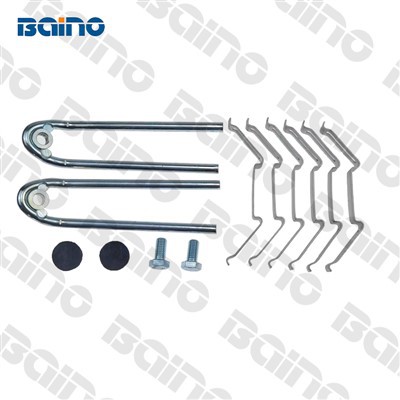


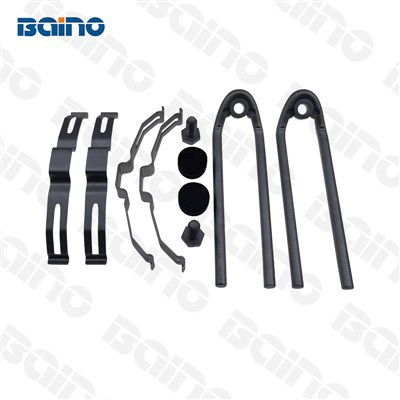


Hangzhou Bainuo Machinery Co., Ltd. is an enterprise established in 2010. The company is committed to the production and manufacturing of auto parts. With professional technology and rich experience, it has established a good mold in the industry. Bainuo Machinery continues to improve high-quality products and excellent services, becoming an important partner in the automotive manufacturing field.

Wide variety of products
Bainuo has nearly 200 types of products, and customers can choose the most suitable product for themselves. Moreover, in order to meet the different purchasing needs of different customers, Bainuo can also provide customized services.
Professional technical team and precision instrument equipment
Bainuo is committed to product research and innovation, and can provide customers with high-quality products and services.
Safe and fast transportation
Near Ningbo Port and Shanghai Port, with short transportation time and lower transportation costs.
Best after-sales service
24-hour online consultation. No matter where you buy our products, you can enjoy a one-year warranty and lifelong maintenance.
Advantages of Bainuo Disc Brake
High-quality raw materials
Makes the product stronger and more durable
Variety of Types
Disc brakes come in various types, such as floating calliper and fixed calliper designs.This allows vehicle manufacturers to choose the most suitable option based on the vehicle's intended use and performance requirements
Precision processing technology
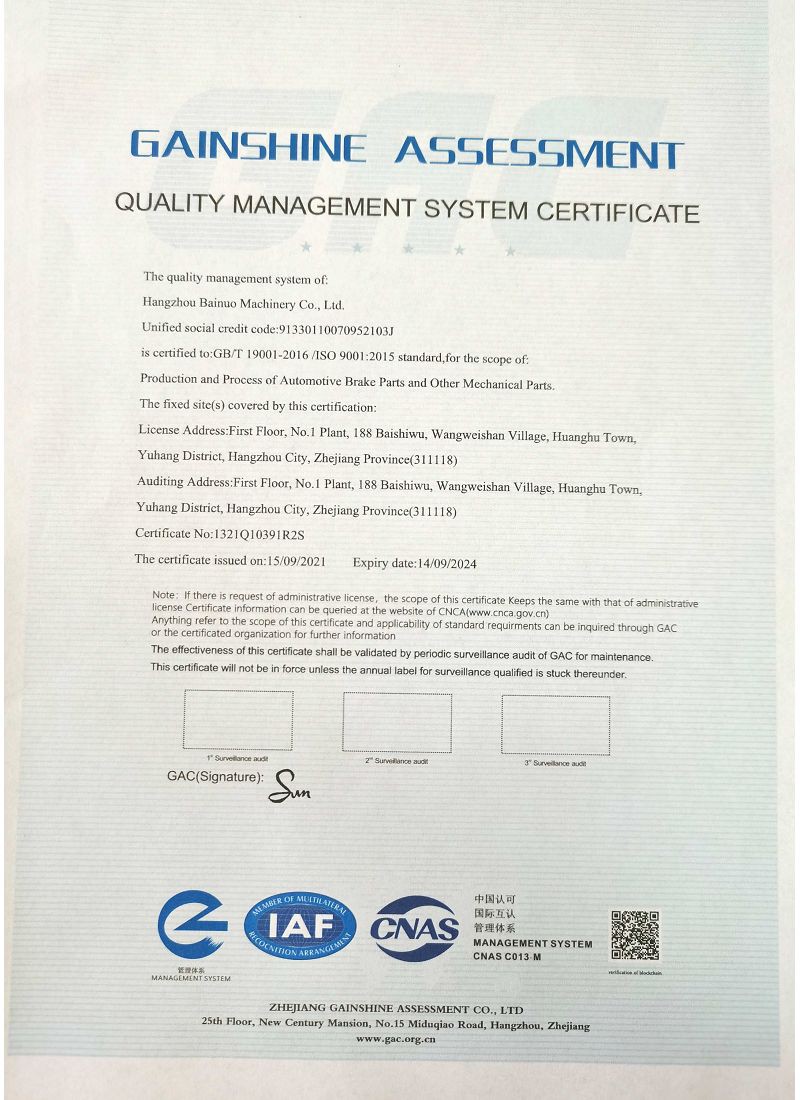
We have a professional technical team and use professional equipment to create the highest quality disc brake kits. And we have passed ISO9001 quality system certification.
Easy to assemble
Our kits available to make fitment and repair fast and straightforward.
Types of Disc Brake
Slotted Disc Brakes
Slotted disc brakes feature shallow channels or slots on the rotor's surface. These slots help dissipate heat and gases generated during braking, improving overall brake performance, particularly in wet or rainy conditions. They also help prevent brake fade, enhancing stopping power and maintaining consistent braking performance over time.
Drilled Disc Brakes
Drilled disc brakes are characterised by holes drilled into the rotor's surface. These holes aid in heat dispersion, reducing the risk of brake fade during intense braking. However, drilled rotors can be more susceptible to cracking under heavy use, so they are often favoured in applications where weight reduction is a priority, such as high-performance sports cars.
Wave-Type Disc Brakes
Wave-type disc brakes stand out due to their distinctive wavy or contoured rotor shape. This design not only improves cooling efficiency but also reduces overall weight. Wave-type rotors are commonly used in off-road and sports applications where durability, heat management, and reduced unsprung weight are essential for optimal performance.
Material of Disc Brake
Grey cast iron
Grey cast iron (flakes graphite cast iron) has excellent processibility and anti-abrasion capability. Grey cast iron has the advantage of being easily mass-produced, making it the most commonly used by discs manufacturers. The drawback is that it could be deformed or cracked under repeated sharp changes in temperature in the high temperature range (about 800℃).
01
CV cast iron
The quality control of CV cast iron during the manufacturing process is extremely difficult, so the quality varies. Sometimes its closer to grey cast iron but other times is closer to ductile cast iron.
02
Ductile cast iron
Ductile cast iron is an excellent material. The tensile strength of ductile cast iron is equal to that of steel. Ductile cast iron also has an high anti-heat capacity (stability against expansion and contraction). Unfortunately, it has low surface hardness, which can cause abnormal wear and/or abnormal heating due to its high exothermicity, if the material is used for brake discs.
03
Carbon
The benefit of Carbon is that it has a high thermal resistance and is lightweight. The downside is that Carbon is expensive, so it is used mainly by high budget racing teams.
04
Application of Disc Brake
Automotive
Disc brakes provide efficient braking performance, heat dissipation, and are easy to maintain. Currently mainly used in cars, motorcycles and other motor vehicles
01
Bikes
Many performance bikes will also come with disc brakes. It provides greater stopping power and regulation, making it safer especially in wet conditions.
02
Aircraft
Disc brakes are used in aircraft landing gear systems to provide reliable and effective braking during landing and taxiing.
03
Industrial Machinery
Disc brakes are used in heavy machinery and industrial equipment such as cranes and winches to achieve controlled stopping and holding of loads.
04
Racing
Disc brakes are widely used in racing cars and motorcycles, and their excellent braking performance and heat dissipation capabilities are crucial for high-speed racing.
05
The Manufacturing Process of Disc Brake
1. Short carbon fibers, toner and thermoforming resin are mixed together.
2. The mixture is poured into a permanent aluminum mold cavity in the shape of a brake disc.
3. Using a lid or the other half of the permanent mold, cover it and press lightly to compress the contents inside.
4. Apply 20 tons of pressure and heat to compact it into plastic
5. Cool the mold.
6. Remove the disc ring, smooth any rough edges, and drill tiny ventilation holes.
7. Place the disc ring in the oven and heat it to convert the plastic into carbon.
8. Fix the disc ring on the high temperature resistant crucible and fill it with fine silicon powder.
9. Place the crucible into the furnace and heat for 24 hours.
10. After taking it out of the furnace, use a drill press to drill the mounting holes on the disc ring and apply protective paint.
11. Polished surface.
Components of Disc Braking systems
When it comes to disc braking systems, there are four parts you need to know: The pads, rotors, calipers, and hardware.
BRAKE PADS
The brake pads are the outermost part of the braking system and true workhorses. The brake pads are one of the brakes components that contact and apply pressure and friction to the brake rotors — the discs that actually slow and stop the vehicle. The pads go under extreme stress every time you slow down and come to a stop, as they control the pace at which your wheels stop turning.
BRAKE ROTORS
The brake rotor is the heart of your braking system and therefore should be made of high-quality materials. When performing any type of brake repair, you should always examine your rotors for wear. We recommend replacing rotors with every brake pad change.
BRAKE CALIPERS
Calipers have a much longer lifespan than any other part of the braking system parts. Though the lifespan varies based on a number of factors, mechanics and manufacturers generally estimate that calipers can last three to four times longer than brake pads. That said, if your caliper is going out, you want to diagnose the issue early on, before it puts you in harm’s way.
BRAKE HARDWARE
Aside from the four main brakes components, your brake system contains a few smaller parts:
①Caliper Pins: Most brake calipers contain two pins which help to move the caliper as pressure is applied to the brake pads.
②Caliper Pin Boots:The pins mentioned above are installed inside of these rubber boots that allow for movement with protection from the weather and road debris.
③Abutment Clips: Abutment clips are the stainless pieces that the pads slide on within the caliper bracket.
Maintenance Tips for Disc Brake
Replace brake components regularly——When you press on the brake pedal, you’re converting the kinetic (moving) energy of the vehicle into thermal energy (heat), subjecting many parts to very high temperatures. This means a lot of wear and tear even in normal conditions. Some brake components will need to be replaced over the life of a vehicle, including: Brake Pad or Brake Shoe Friction Material, Brake Fluid, Seals, Brake Lines/Hoses, Rotors, Dust Boots, Master Cylinder.
Check the pads by removing the wheel and looking into the space where the rotor spins—— If the pads are glazed, remove them from the calipers and lightly scuff them on a piece of sandpaper laid on a flat surface. If the pads are less than 3mm thick, including their metal holder, they need to be replaced.
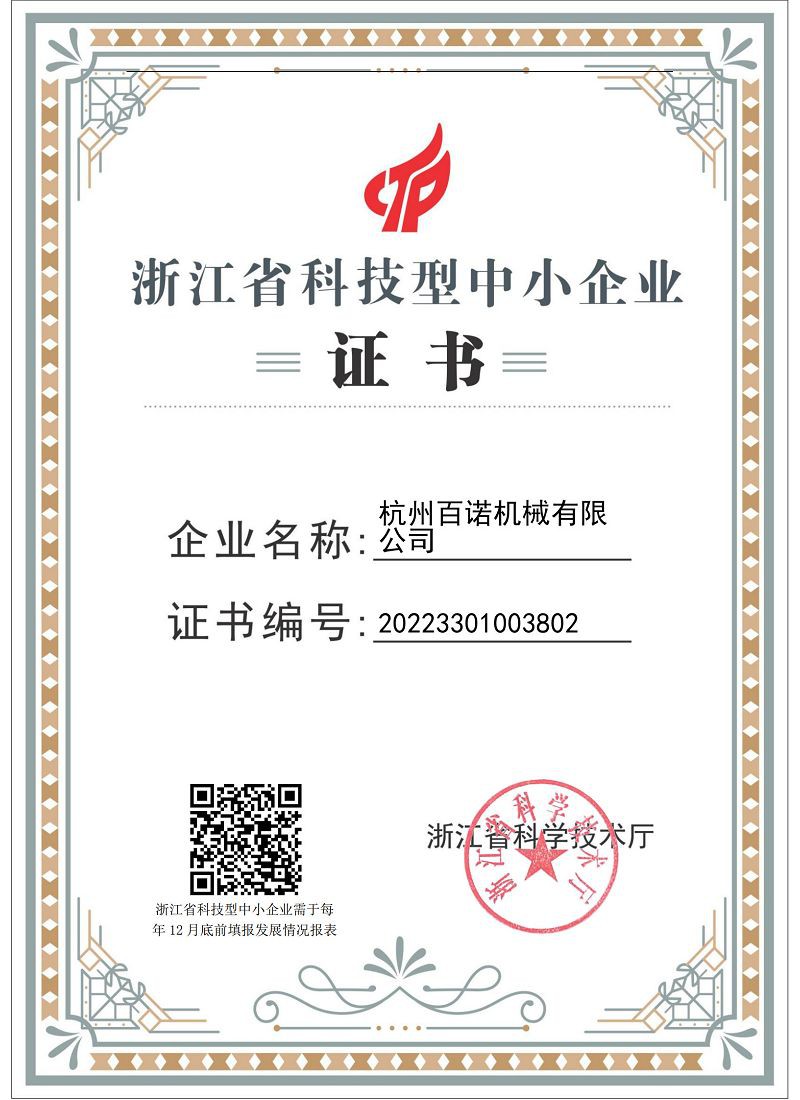
Certifications


Our Factory


FAQ
Q: 1、What is disc brake and drum brake?
Q: 2、What are the safety advantages of using air disc brakes?
②Generally less maintenance, although not maintenance-free.
③No slack-adjuster-related “out of adjustment” violations from roadside inspections.
④Longer life before replacement.
Q: 3、Where is the brake disc?
Q: 4、What is the purpose of the disc brake?
Q: 5、How do you know if you need new brake discs?
Q: 6、How many years do brake discs last?
Q: 7、What happens if brake discs are worn?
Q: 8、Are disc brakes better in rain?
Q: 9、Can you change brake discs without changing pads?
Q: 10、Should I replace discs and pads together?
Q: 11、How many brake discs does a car have?
Q: 12、Can you put new brake pads on worn discs?
Q: 13、How much do brake discs cost?
Q: 14、Can I clean disc brakes with water?
Q: 15、Do disc brakes need to be replaced frequently?
Q: 16、Is it safe to use disc brakes?
Q: 17、Why are disc brakes so popular?
Q: 18、What's wrong with disc brakes?
Q: 19、Why are disc brakes better than rim brakes?
Q: 20、Do disc brakes need adjusting?
We're well-known as one of the leading air disc pad hardware kit manufacturers and suppliers in China. Welcome to buy custom made air disc pad hardware kit at competitive price from our factory. For OEM service, contact us now.
